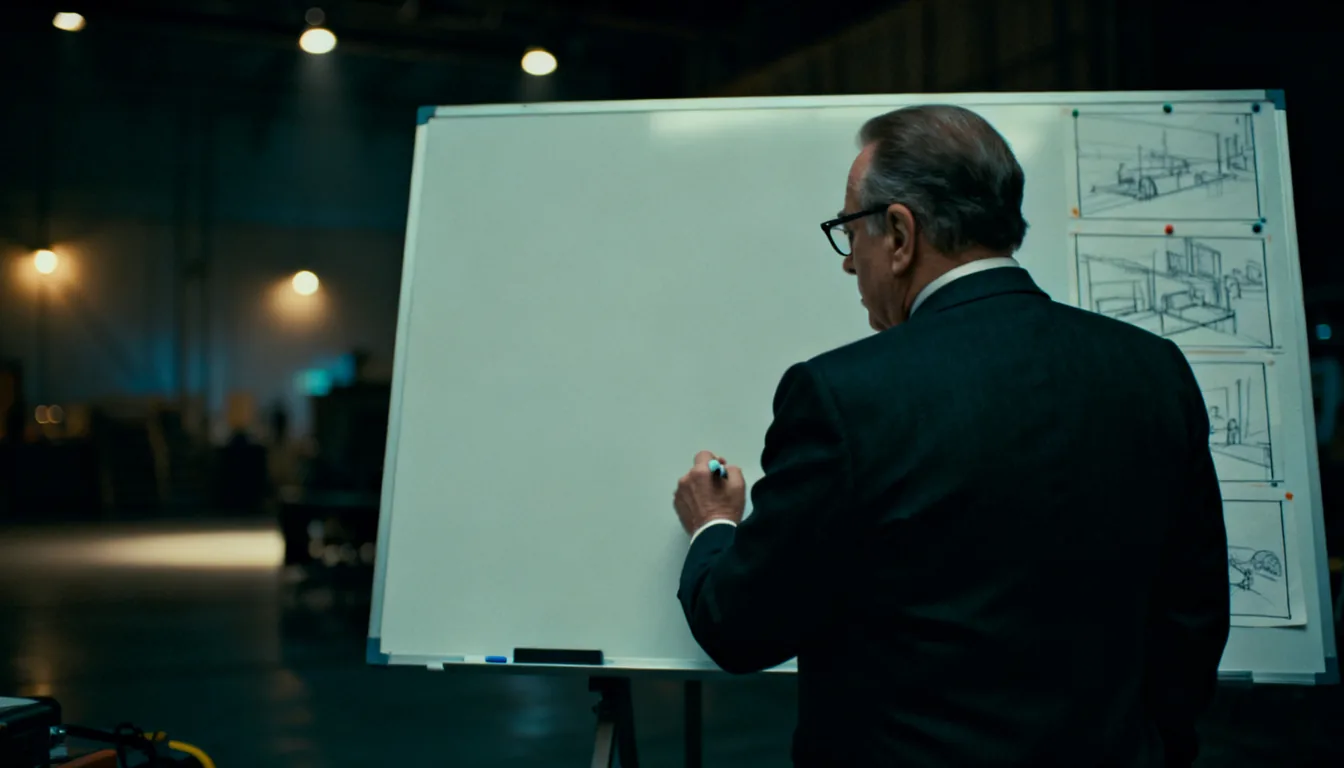
When one of the greatest living filmmakers publicly says he's using AI to storyboard, the whole industry should pay attention. That's exactly what just happened. Martin Scorsese — the director behind Taxi Driver, Goodfellas, The Departed, and The Irishman — has joined Black Forest Labs as an advisor, and he's been testing their FLUX image models for storyboarding and pre-visualization during pre-production.
For those of us who build AI storyboarding tools every day, this is a genuinely exciting moment. Not because it's a celebrity endorsement — but because it validates something we've believed from day one: AI storyboarding isn't a gimmick or a shortcut for people who "can't make real films." It's a serious pre-production craft, and now one of cinema's most respected voices is saying so out loud.
Scorsese framed it around a problem every director has wrestled with since the medium began. In his words: "There's always been this problem of, how do you communicate what you see in your head to your cast and crew?" That single sentence is the entire reason storyboards exist — and the entire reason AI storyboarding is taking off.
He went on to describe the practical payoff: "Now, with this tool, I can share what I'm visualizing more clearly and efficiently to my creative team — the production designer, art designer, and cinematographer." And on the creative effect of moving fast: "The ability to visualize and immediately share the storyboard was creatively freeing… this allowed us to move faster without sacrificing quality or craft."
That's the headline for us. Faster without sacrificing craft. A director with a 125-year sense of film history — who adopted 3D for Hugo and de-aging for The Irishman — sees AI visualization as the next tool in a long line of tools, with human taste, values, and judgment kept firmly at the center. We couldn't have put it better ourselves.
For years, AI storyboarding carried a faint stigma in some corners of the industry — as if reaching for a generative tool meant you weren't a "real" filmmaker. That framing was always wrong, and moments like this dismantle it. When Scorsese says he's storyboarding with AI, it stops being a fringe technique and becomes part of the professional conversation.
It also points to something we see every single day: the bottleneck in pre-production was never the idea. Directors have always had the vision. The bottleneck was translating that vision into something a cast and crew can actually see — quickly enough to iterate, cheaply enough to explore ten options instead of one. That's the exact gap AI storyboarding closes, and it's why adoption is accelerating from indie filmmakers all the way up to legends.
Here's a detail we love about this news: the technology Scorsese is testing is built on Black Forest Labs' FLUX models — and FLUX is among the model families we use under the hood at Storyboarder.ai. We're model-agnostic by design, combining best-in-class generative models so that every frame comes out cinematic, controllable, and consistent. FLUX is a meaningful part of that stack.
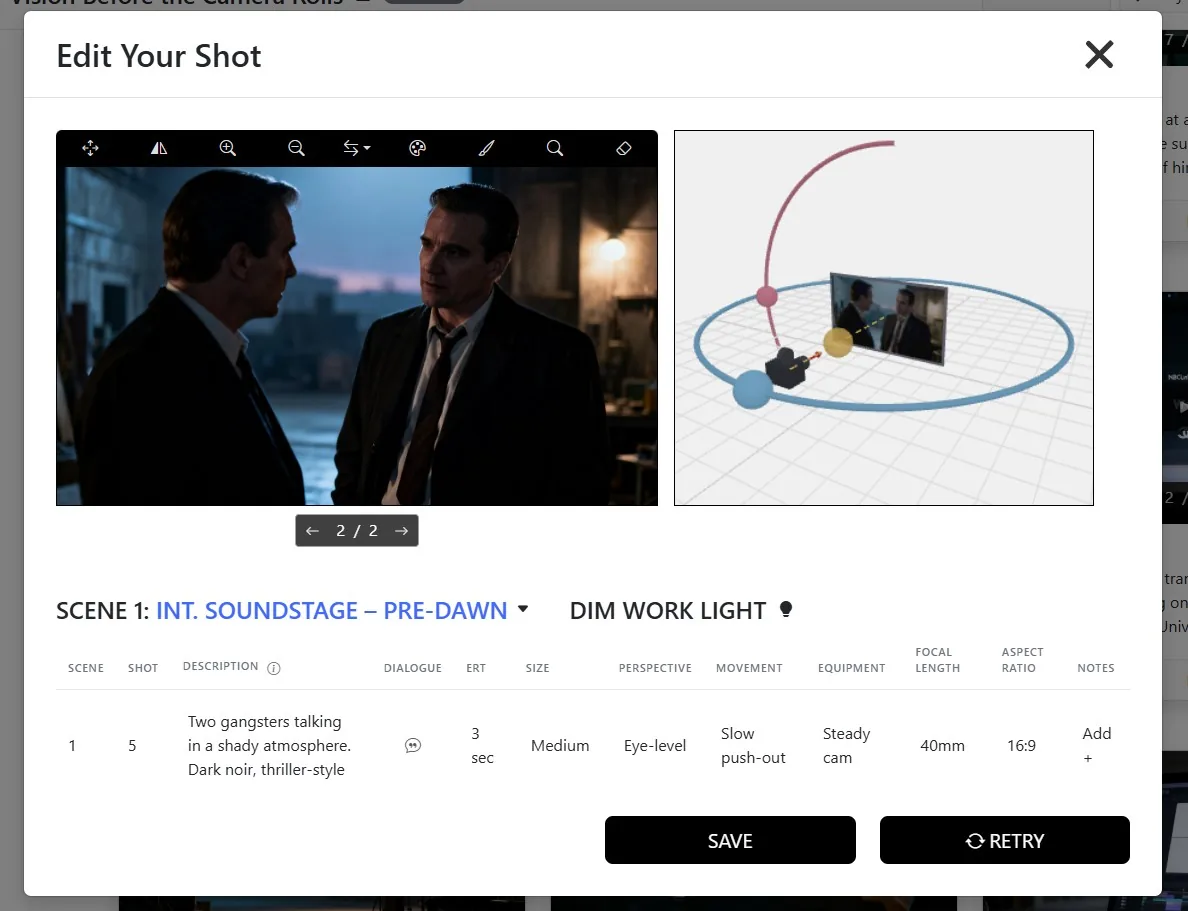
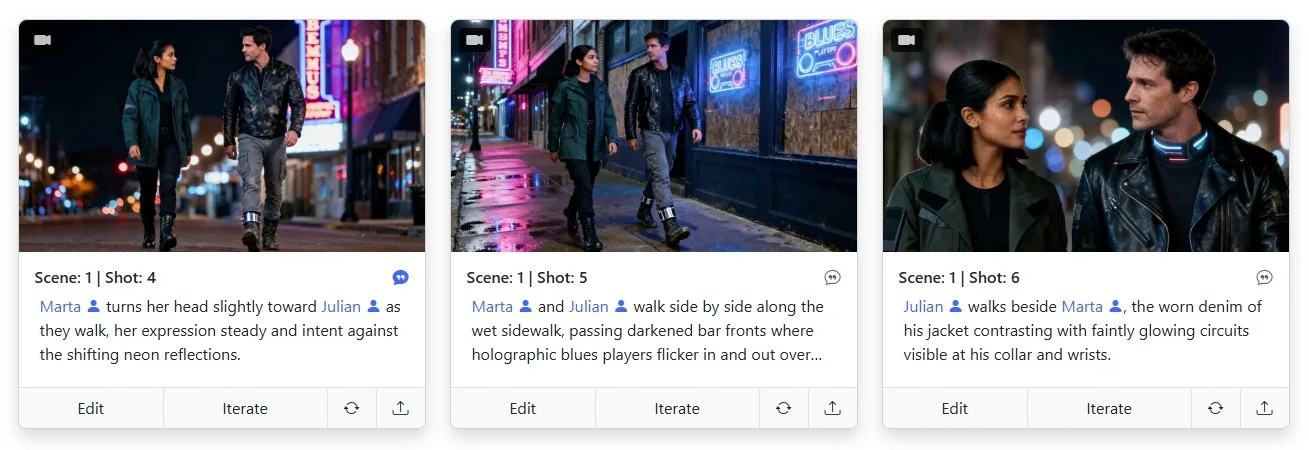
So while Scorsese is using FLUX directly through Black Forest Labs, the same underlying class of technology is already powering a complete, purpose-built storyboarding product — one designed specifically for film and video pre-production rather than general image generation. That means character consistency, location control, camera angles, shotlists, and an editable storyboard timeline, all in one place.
To be clear about what we're not saying: Scorsese isn't using our tool, and we'd never imply otherwise. He's working directly with Black Forest Labs on FLUX. What we can say is that we're thrilled to see a director of his stature put a spotlight on AI storyboarding as a legitimate, craft-respecting part of filmmaking. A rising tide lifts the whole category — and that's good for every filmmaker considering these tools.
And here's the part we're usually not allowed to spell out: countless studios, well-known directors, writers, and full-scale productions already storyboard with Storyboarder.ai. For confidentiality and contractual reasons, we typically can't name them. But the work is happening — quietly, daily, on commercials, short films, series, and features you'd recognize. Scorsese publicly embracing AI storyboarding simply makes it easier for the rest of the industry to talk openly about a workflow that's already become normal behind closed doors.
If a filmmaker with Scorsese's track record sees value in storyboarding with AI, that's permission for everyone else to stop hesitating. The question is no longer "is this a real tool for serious filmmakers?" It clearly is. The question is just which tool fits your workflow.
That's where a dedicated storyboarding platform pulls ahead of raw image generators. With Storyboarder.ai you don't just get pretty frames — you get the things a production actually needs:
Martin Scorsese joining Black Forest Labs and using FLUX to storyboard is a milestone for the whole craft — a clear signal that AI storyboarding belongs in serious filmmaking. We're delighted to see it, partly because FLUX is one of the model families we build on, and partly because it validates what studios, directors, and writers are already doing with Storyboarder.ai every day (even when we can't name them). The vision in a director's head is finally easy to share with the crew. If you've been waiting for a sign that AI storyboarding is the real deal, this is it. Try it for yourself on Storyboarder.ai and bring what you see in your head to the screen.
Why Storyboarder.ai is the top pick for filmmakers worldwide — a deep dive into features, quality, and workflow.
Read Article →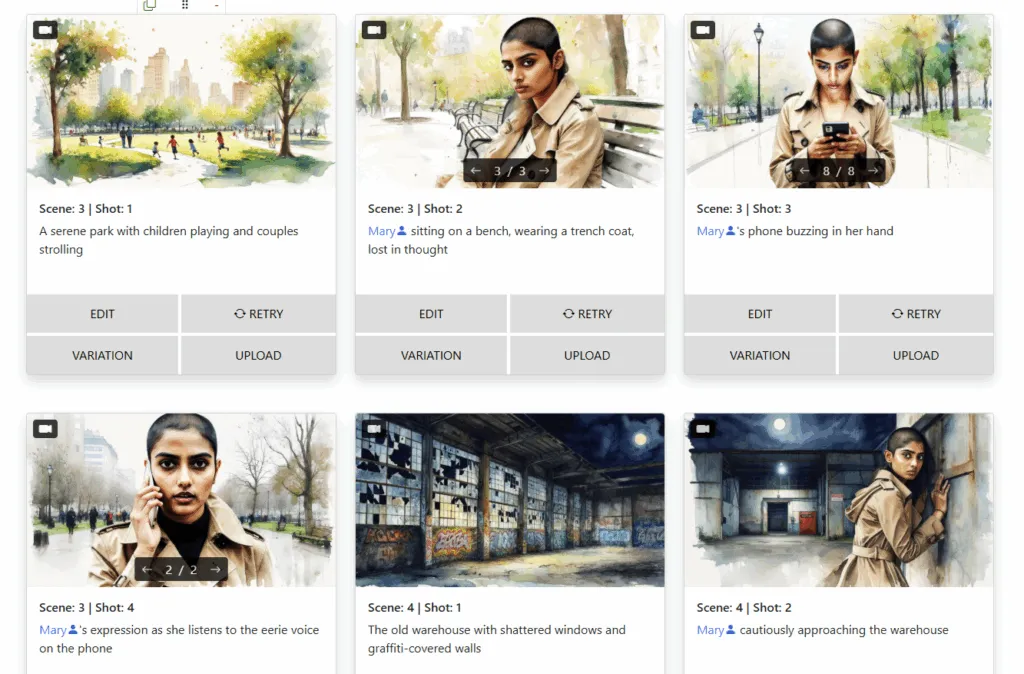
Learn the tricks pros use to keep faces, outfits, and vibes aligned across every frame of your storyboard.
Read Article →
Filmmakers are storyboarding entire feature-length films with Storyboarder.ai. Here's how it works and what to expect.
Read Article →